Northern lights
Northern lights
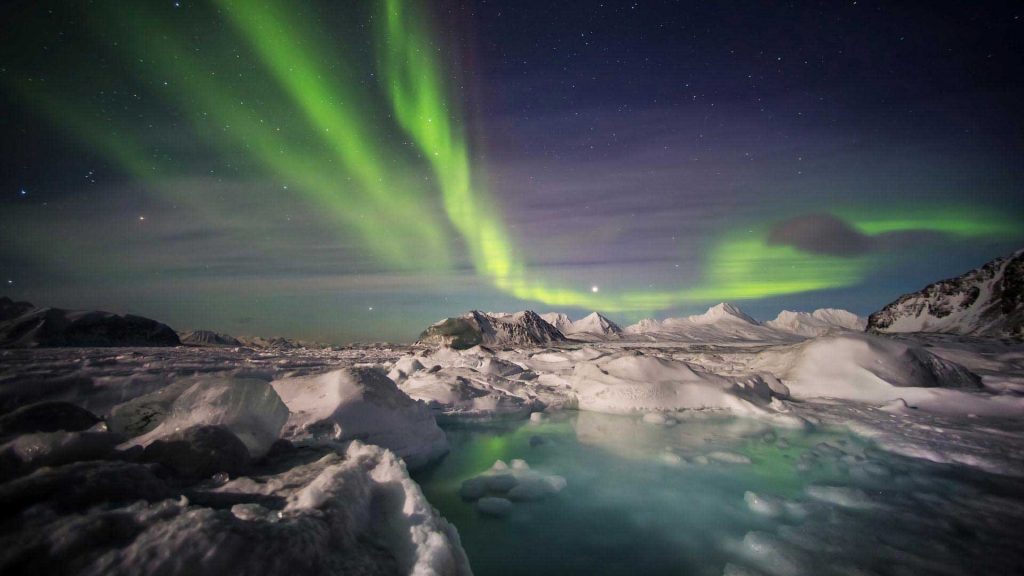
The Northern Lights season in Svalbard is from late September to the middle of March. The best time is from 18:00 (6 p.m.) to midnight, while there is also a good period between 04:00 and 08:00 (4 a.m. and 8 a.m.).
10 things you should know about the Northern Lights
Surrounded by myths and legends, the Northern Lights provide a wonderful reason to visit Svalbard during the Polar Night. This article provides information and useful tips about this fantastic natural phenomenon that includes every colour of the rainbow dancing in the sky above us.
1. What are the Northern Lights?
The Northern Lights are a physical phenomenon that occurs when the solar winds are stronger than normal. Electrically charged particles released from the sun collide with gases such as oxygen and nitrogen when they enter the earth’s atmosphere, which we see as green, yellow, red or orange light in the sky. The Northern Lights generally occur at an altitude of 80 to 500 km above the ground.
2. How do you experience the Northern Lights?
Your best chances of experiencing the Northern Lights are in the northern parts of Scandinavia, northern Russia, Alaska, northern Canada, Greenland and Iceland. It may be visible in southern Norway once a month and even less frequently further south in Europe. The Northern Lights season in Svalbard is from late September to the middle of March. The best time is from 18:00 (6 p.m.) to midnight, while there is also a good period between 04:00 and 08:00 (4 a.m. and 8 a.m.). During the darkest time of the year in Svalbard in December and January, it’s possible to see the Northern Lights around the clock – even in the middle of the day. Svalbard is the only place on earth you can experience what we refer to as “daytime Northern Lights”. For this reason, a lot of international Northern Lights research takes place in Svalbard and a Northern Lights observatory and EISCAT radars are located here. To ensure the most spectacular Northern Lights experience, you should avoid visiting when there’s a full moon. You should also allow several days for your visit, which improves your chances if the Northern Lights is conspicuous by its absence one evening.